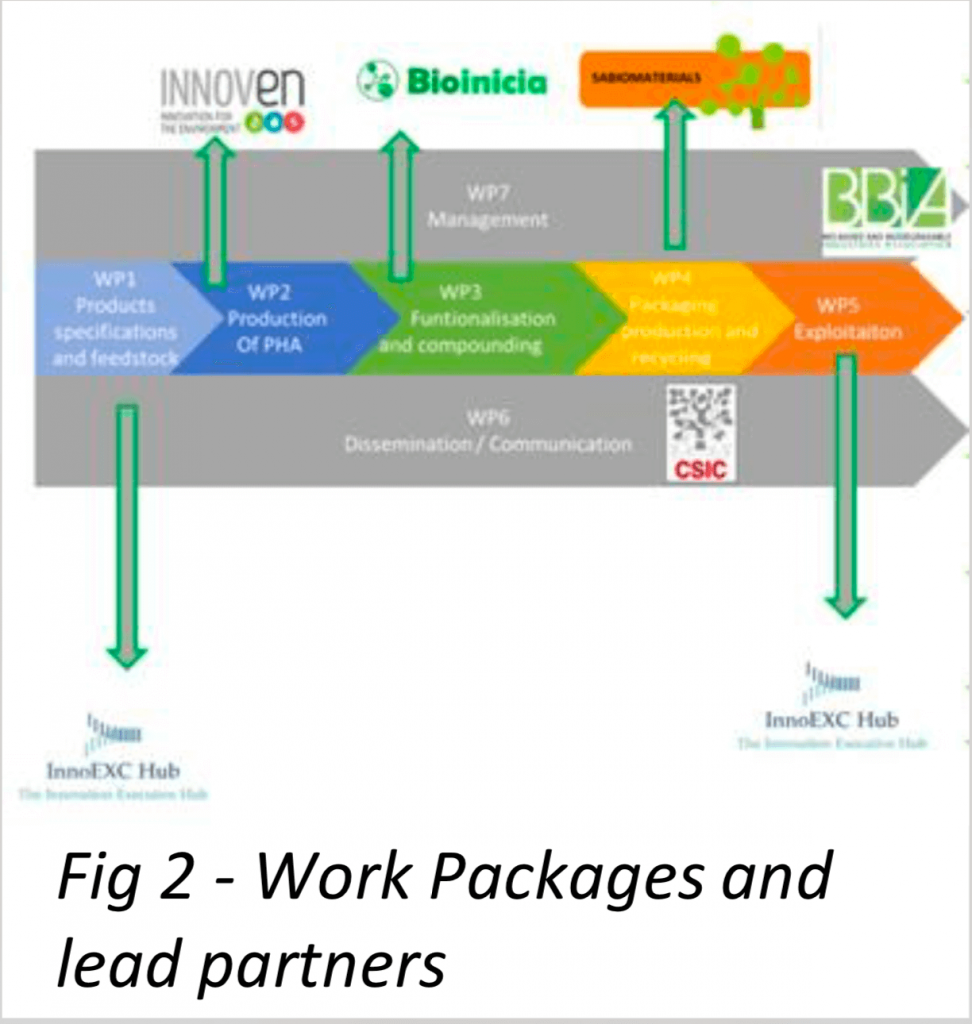
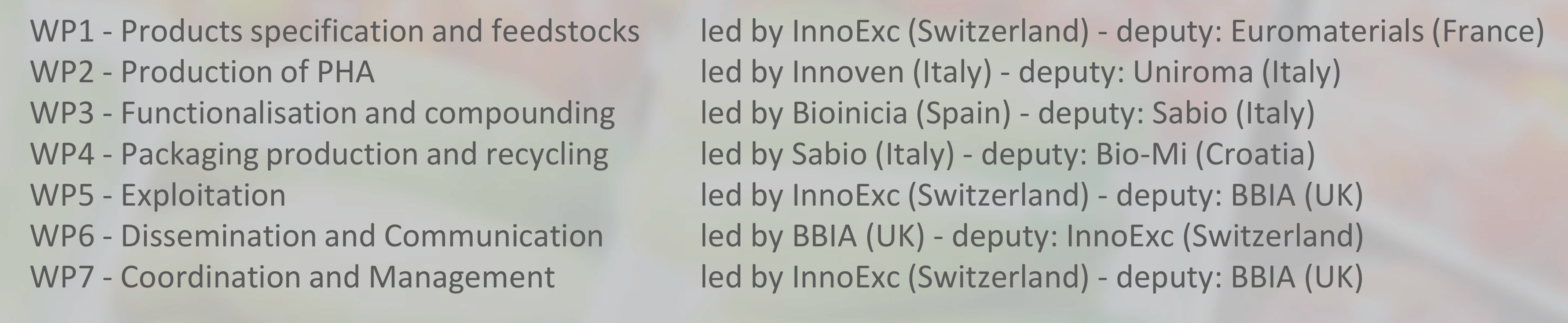
Under this work package, partners have been tasked with establishing a “Database and scenario for environmental impact of Usable Packaging”, drawing “Initial Technical Specifications for End Use Usable Packaging Portfolio” and reviewing “Feedstock Availability and Characteristics for the Production of Bio- polymers”.
The methodology used for the Life Cycle Assessment of PHA material production was developed around five different stages of life: A – substrate production, including collection, storage and pre-processing, B – PHA fermentation, C – PHA downstream process, D – bioplastic moulding and E – bioplastic end-of-life.
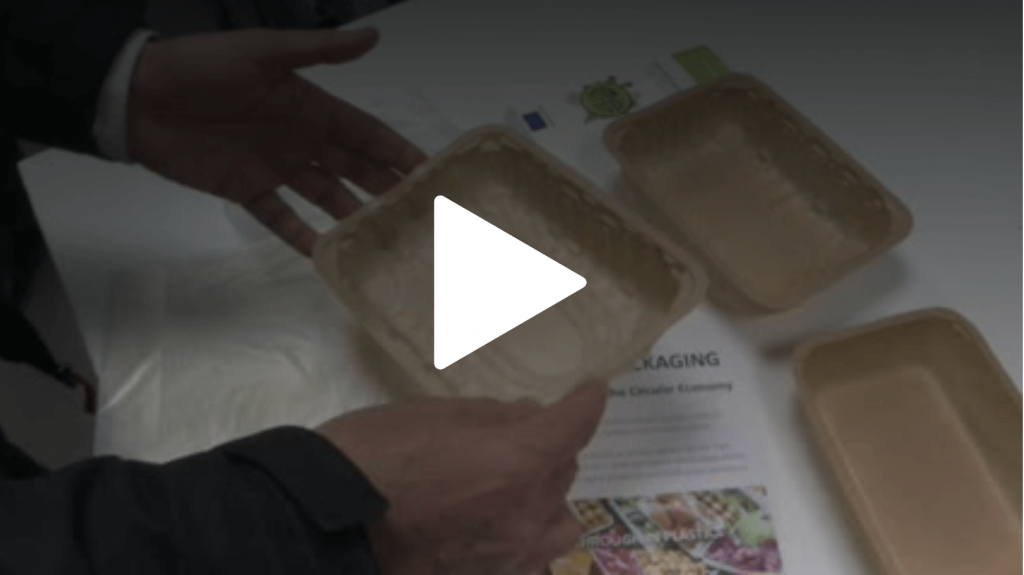
Then the team established a catalogue of specifications for packaging products selected by Usable Packaging industrial partners. The portfolio contains cup, cutlery, plate, food tray commercialized by Sphere, flow pack for breads, tubes and bag for dry biscuits used by Barilla, Sonae’s and Orogel’s frozen food packaging, wine bags from Caviro, large bags for agricultural products used by PHR, nest and tub for pharma used by Ompi and blow molding bottles for Koruma. This catalogue provides the consortium with the primary key input necessary for the design of the packaging developed throughout the project.
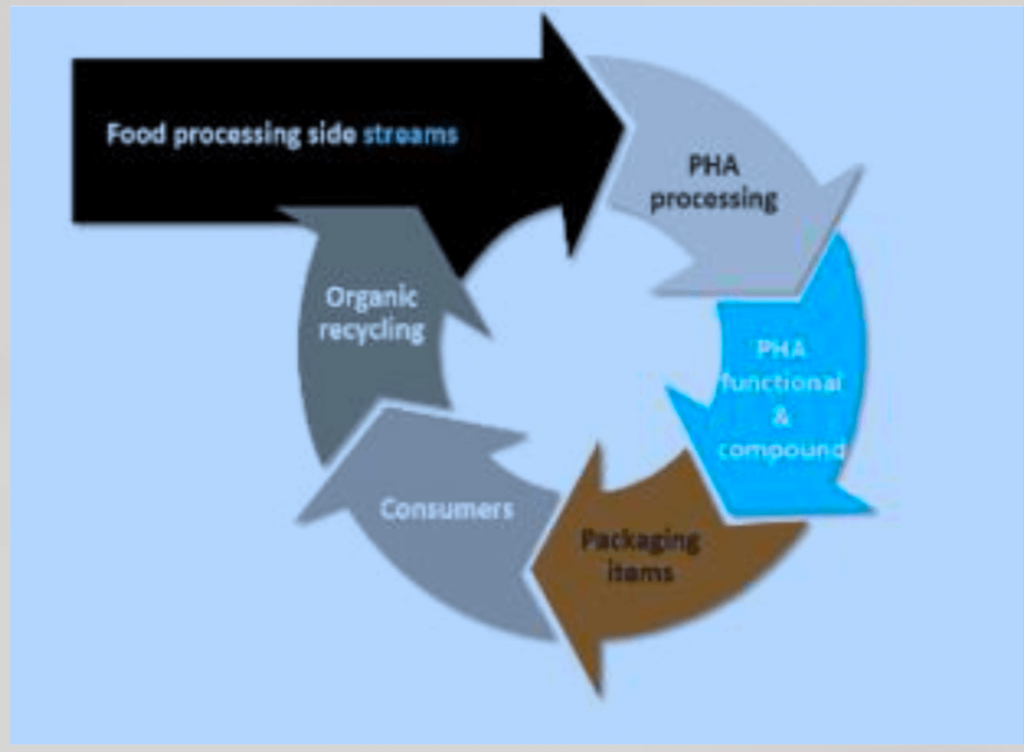
Finally, they carried out an inventory of Agricultural Waste, Co-products and By-products (AWCB) available in Europe and specifically from the consortium industrial partners. AWCB types, sources and volumes were identified, revealing the large quantities and diversity of the materials available. The panorama includes the details and characteristics of AWCB generated by the project’s industrial partners and main AWCB available in Usable Packaging consortium countries derived either from agriculture or industry. Their report also includes details on the supply chain constraints linked to specific types of AWCB, data on environmental, legal and economic constraints as well as current ways of valorizing the identified feedstocks. While the total AWCB volume from the industrial partners look big, it will be necessary to investigate the economic and environmental viability of using it.
An economic viability analysis was performed at it emerged that the cost structure of products is strongly dependent on the raw materials provided as feedstock, with excellent competitivity with state-of–the-art bio reach in case of side streams from bread and pasta production.